The Only 2 Questions a Business Can Legally Ask You Under the ADA
The Americans with Disabilities Act lets a restaurant, hotel, or store ask exactly two things — and prohibits everything else. Here's what they are, why they matter, and what to say if a business pushes for more.
The two questions, in plain English
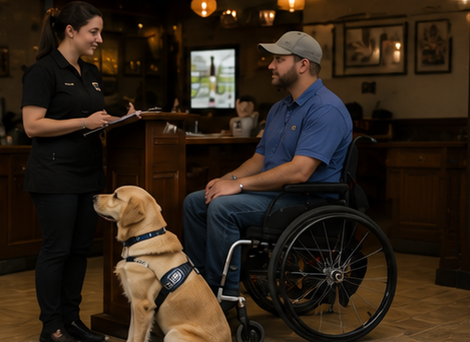
Under 28 CFR § 36.302(c), businesses covered by Title III of the Americans with Disabilities Act are limited to two questions when the disability is not obvious:
- "Is the dog a service animal required because of a disability?"
- "What work or task has the dog been trained to perform?"
That is the entire list. The Department of Justice has been crystal clear on this point for over a decade. The questions exist so businesses can distinguish a working service dog from a pet, not so they can interrogate disabled people.
What businesses are NOT allowed to ask
This is where most access disputes happen. A nervous manager or untrained employee defaults to asking for things they have absolutely no legal right to demand:
- What is your disability? Illegal. The ADA is structured so you do not have to disclose.
- Can I see registration / certification / a doctor's note? Illegal. No such document is required.
- Can the dog demonstrate the task? Illegal. Performing the task on demand is not a precondition.
- What is your dog's name? Not required. You can answer or not.
- Where did you get the dog? Not required. You may have trained it yourself, which the ADA explicitly allows.
The script that handles 95% of situations
"Yes, [Dog's name] is a service animal trained to [task]. Under the ADA, those are the only two questions you're allowed to ask. I'm happy to continue with what I came in for."
That single sentence acknowledges the law, gives the staff member their answer, gently signals that you know your rights, and pivots back to the business at hand. Most exchanges end right there.
When they push for more
"I understand you may be used to asking for paperwork, but the ADA only allows the two questions, and I've answered both. If we need to take this further, I'm happy to wait while you call your manager."
Most retail managers know the rules better than their floor staff. Calling a manager almost always solves the problem in under three minutes.
If a business still refuses
- Ask for the manager's name and corporate complaint line.
- Make a note of the date, time, store address, and what was said.
- Call the ADA Information Line: 1-800-514-0301 (Mon–Fri, free). They walk you through how to file a complaint.
- File a complaint with the Department of Justice at ada.gov/file-a-complaint.
- For repeat offenders, a brief, factual letter to the business often gets faster results than a formal complaint.
Why this matters
The "only two questions" rule isn't bureaucracy, it's a protection. Without it, every disabled person would have to disclose private medical details to every retail clerk who felt nervous about a dog in their store. The ADA recognizes that the average teenager working the register has no business knowing about your PTSD, autism, or seizure disorder. The two-question rule lets businesses verify they're not dealing with a fake while letting handlers keep their dignity.
The next time someone presses for more, remember: they don't have the right to know. And neither do you have to teach them. You're there to live your life. That's the whole point.
Common questions
What two questions can a business ask about a service dog?
Under the ADA, staff may ask only: (1) Is the dog a service animal required because of a disability? and (2) What work or task has the dog been trained to perform? They may not ask anything else.
Can a business ask what my disability is?
No. Staff cannot ask about the nature or extent of your disability. They also cannot require medical documentation, require the dog to demonstrate its task, or require proof that the dog is certified or registered.
Can a business ask for proof or papers for my service dog?
No. The ADA prohibits businesses from requiring documentation, ID cards, certificates, or registration. The only permitted inquiry is the two questions, and only when it is not obvious what service the dog provides.
What should I say when asked the two questions?
Answer simply: "Yes, she is a service dog required because of a disability," and name the task, for example "She is trained to alert me before a medical episode." You do not need to disclose your diagnosis.
Key terms explained
- Two permitted questions
- The only inquiries the ADA allows staff to make of a service dog handler.
- Title III
- The part of the ADA covering places of public accommodation such as stores, restaurants, and hotels.
- Public accommodation
- A private business open to the public that must comply with ADA access rules.
- Misrepresentation
- Falsely claiming a pet is a service dog, which is illegal in many states.
Written and reviewed by the ADA Service Dog Team
VerifiedADA Service Dog is operated by NS Design ID Cards, the team behind assistancedogregistry.co.uk and esasupport.co.uk, supporting assistance dog handlers since 2020 with over 20,000 ID cards shipped. Our guidance is grounded in the Americans with Disabilities Act and current Department of Justice, DOT, and HUD guidance. Registration is voluntary, and we always say so honestly.
Important
This article is general orientation, not legal advice. For your specific situation, contact the ADA Information Line at 1-800-514-0301 or a disability rights attorney. ADA Service Dog Registry is a voluntary handler identification platform, not affiliated with the ADA, DOJ, or any US government agency.
Keep reading
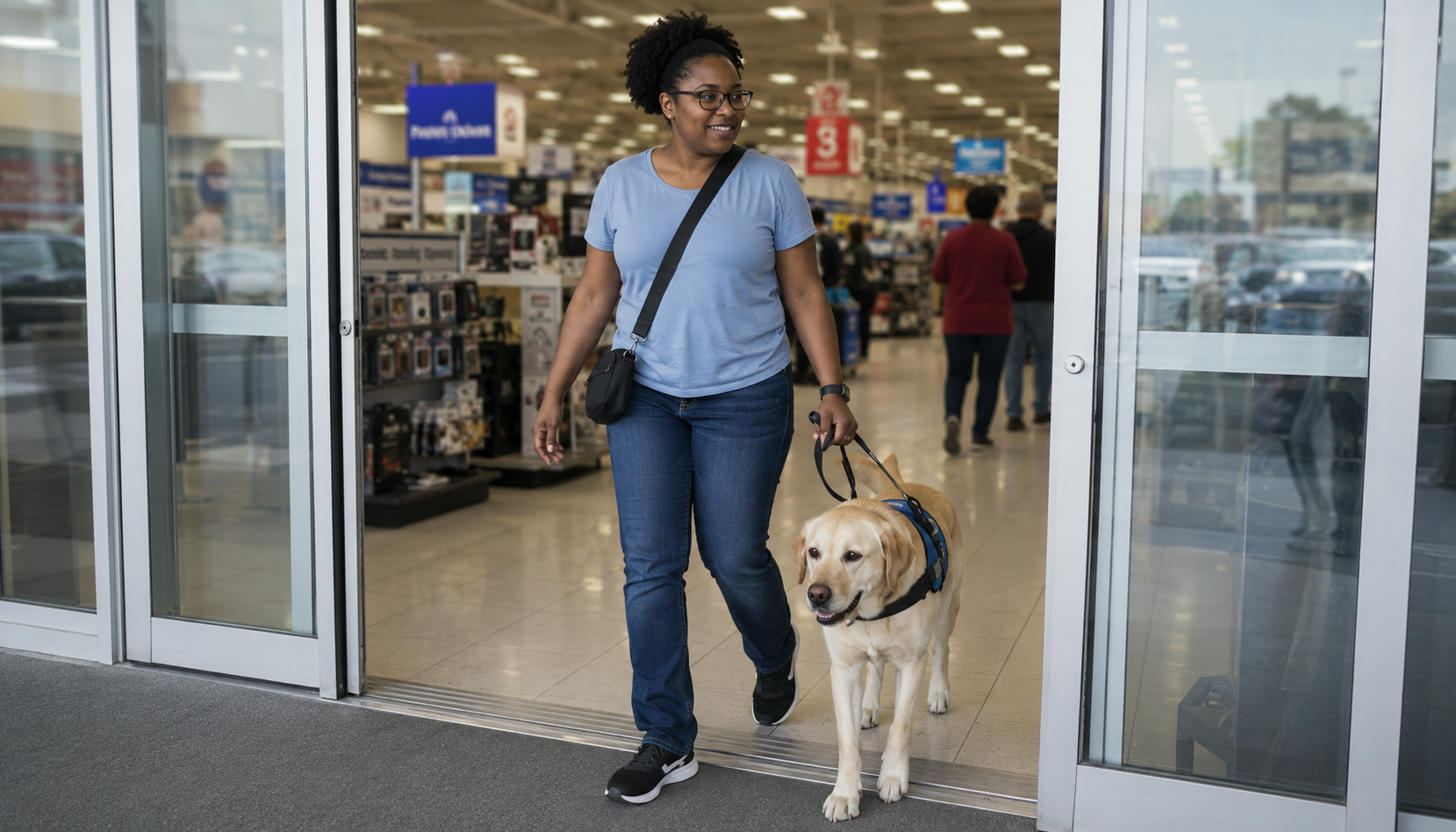
Do Service Dogs Have to Be Registered? No. Here's What That Means for You
There is no federal service dog registry, no state requires one for ADA access, and no business can demand pap...
Read →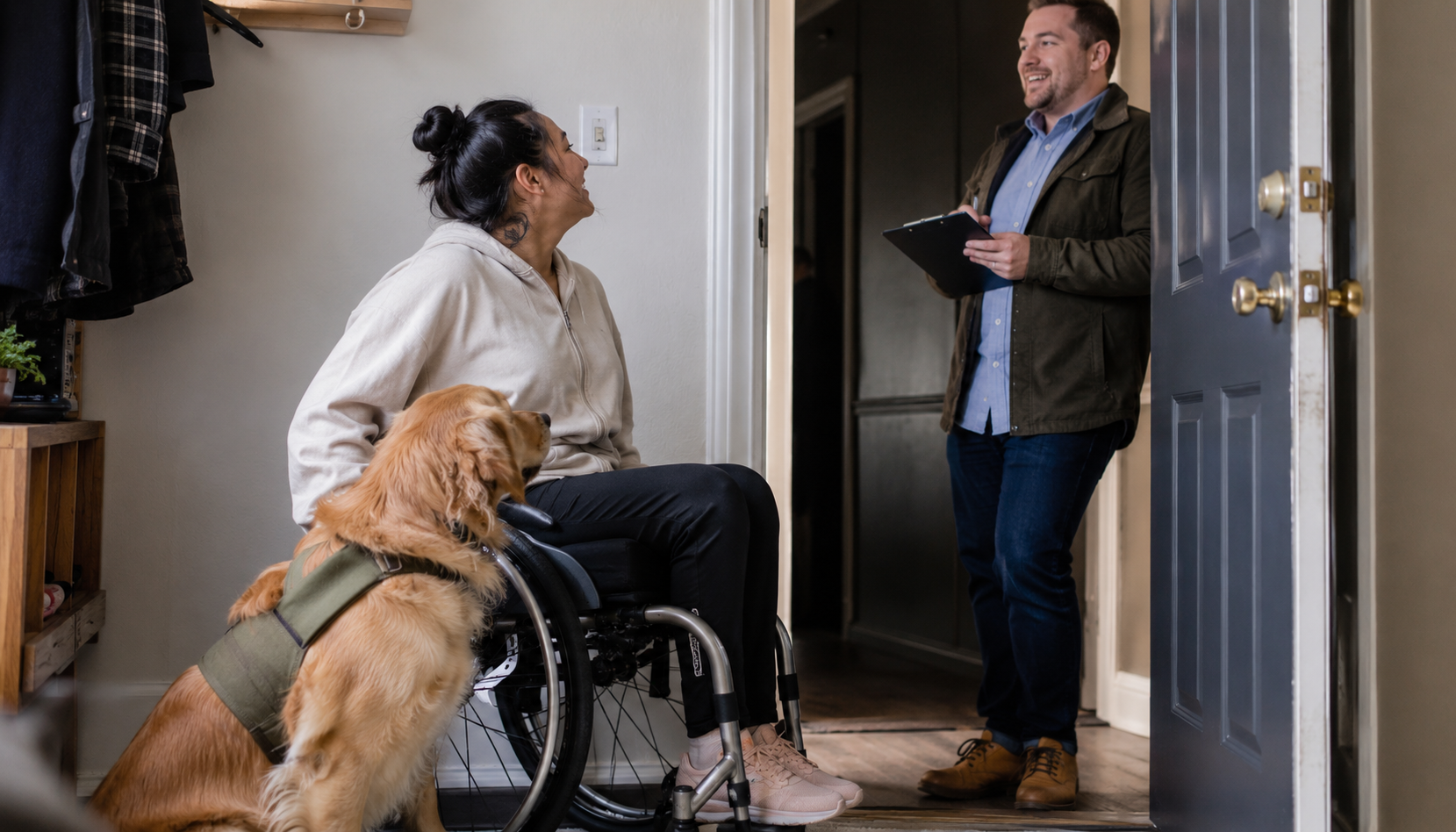
What Can a Landlord Legally Ask About Your Service Dog? (2026 HUD Update)
HUD withdrew its long-standing assistance animal guidance in September 2025, and a May 2026 enforcement memo n...
Read →
Service Dogs and Renting: Pet Fees, Breed Bans, and No-Pet Buildings (2026 FHA Guide)
No pet deposit, no pet rent, no breed restrictions: under the Fair Housing Act a service dog is not a pet. A p...
Read →Get the card. Skip the explanations.
Digital handler ID + AI ADA Coach + state-specific rules from $4.99/mo. 30-day money-back guarantee on lifetime plans.
See plans →