Service Dog vs ESA vs Therapy Dog: The Real Legal Differences
These three terms are often used interchangeably online — but the ADA gives one category enormous protection and the other two almost none. Get the categories right and your conversations get easier.
One word changes everything
The legal protections you have depend entirely on which of these three categories your dog falls into. The categories sound similar. The laws around them are wildly different.
Service dog (the strongest category)
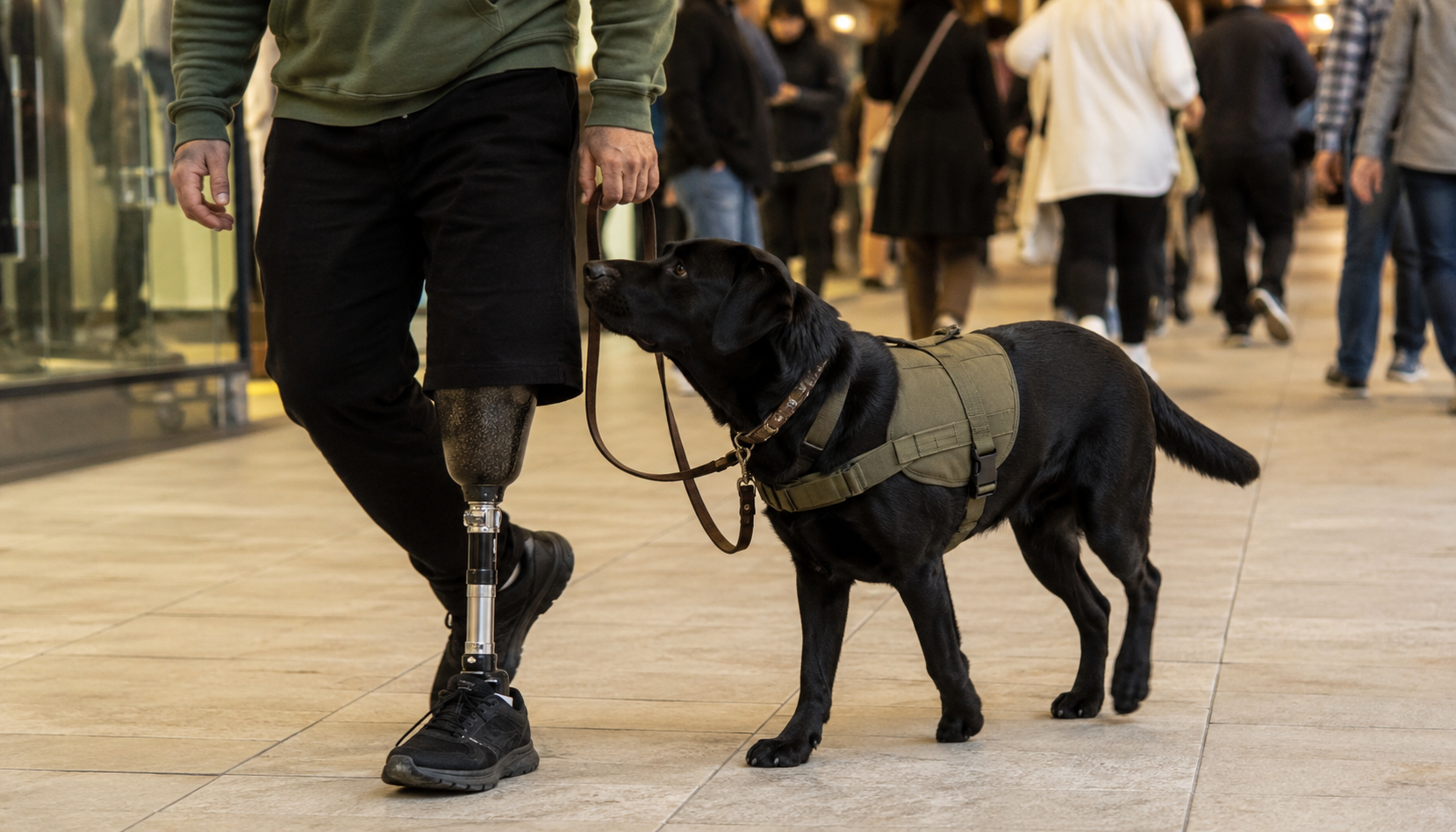
The Americans with Disabilities Act (ADA) defines a service dog as a dog individually trained to perform a task directly related to a person's disability. Examples:
- A guide dog leading a blind handler
- A dog alerting a deaf handler to sounds
- A dog interrupting a panic attack for a PTSD handler
- A dog detecting blood sugar drops for a diabetic handler
- A dog providing deep pressure therapy for an autistic handler
- A dog retrieving dropped items for a mobility-limited handler
What service dogs get under the ADA:
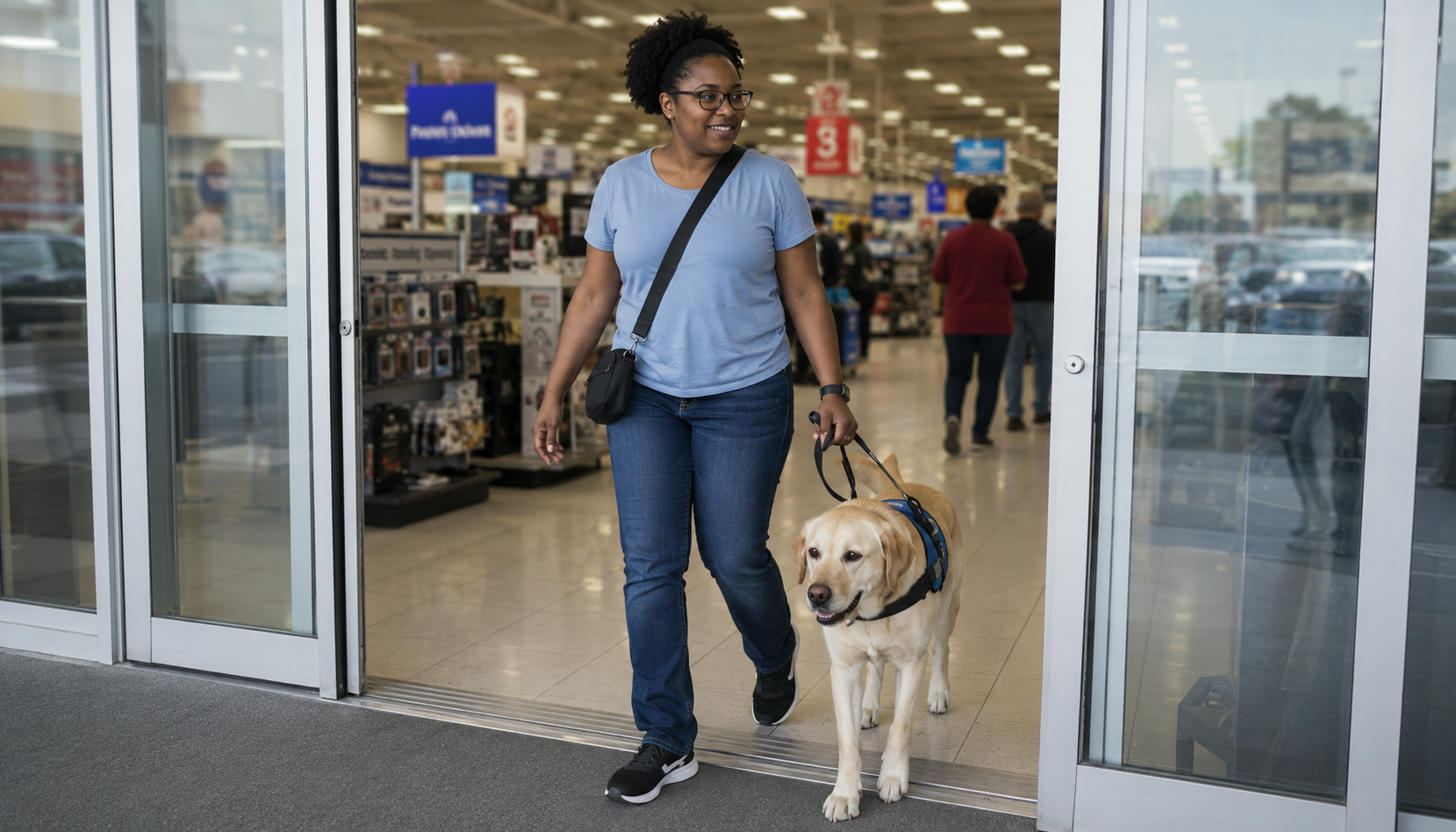
- Full public access to any place open to the public (restaurants, stores, hotels, hospitals, government buildings, transportation)
- No registration, certification, or documentation required
- Protected against pet fees, deposits, or breed restrictions
- Owner-training is allowed, you don't need a professional program
Emotional support animal (ESA)
An ESA provides comfort through companionship to someone with a mental or emotional condition. The dog does not perform a trained task, its presence alone is the support.
What ESAs get under federal law:
- Housing: Under the Fair Housing Act, landlords must reasonably accommodate ESAs even in "no-pet" buildings (with proper documentation from a licensed mental health professional).
- Air travel: Used to have cabin access, this changed in 2021. The DOT now allows airlines to treat ESAs as regular pets. Most airlines do.
- Public access: None. ESAs do not have ADA public access rights. A restaurant can legally refuse them.
Therapy dog
Therapy dogs are personal pets, often certified by groups like Therapy Dogs International, trained to be calm around strangers in unfamiliar environments. They visit hospitals, schools, nursing homes, libraries, etc., to provide comfort to others.
What therapy dogs get: Public access only where their visit is invited and arranged. They have no ADA public access rights, no Fair Housing Act protections beyond what any pet gets.
The comparison table
| Right | Service Dog | ESA | Therapy Dog |
|---|---|---|---|
| Public access (stores, restaurants) | ✅ Full | ❌ None | ❌ None |
| Housing (no-pet buildings) | ✅ Protected | ✅ Protected | ❌ None |
| Air travel (cabin) | ✅ Free | ❌ Pet fees apply | ❌ Pet fees apply |
| Training requirement | Task-trained | No tasks | Calm temperament |
| Documentation required | No | MHP letter | Invitation-based |
Why this confusion is dangerous
When someone shows up at a restaurant with an ESA and insists it's a service dog, two things happen: they get caught, and real handlers pay the price. Every news story about "fake service dogs" makes business owners more suspicious of real handlers. Every Reddit thread about ESAs being passed off as service dogs makes the discourse worse for everyone.
If your dog provides comfort but performs no task, it's an ESA, protect your housing rights, but don't try to bring it into Walmart. If your dog has been trained to do something specific for your disability, it's a service dog, and your access rights are airtight.
Written and reviewed by the ADA Service Dog Team
VerifiedADA Service Dog is operated by NS Design ID Cards, the team behind assistancedogregistry.co.uk and esasupport.co.uk, supporting assistance dog handlers since 2020 with over 20,000 ID cards shipped. Our guidance is grounded in the Americans with Disabilities Act and current Department of Justice, DOT, and HUD guidance. Registration is voluntary, and we always say so honestly.
Important
This article is general orientation, not legal advice. For your specific situation, contact the ADA Information Line at 1-800-514-0301 or a disability rights attorney. ADA Service Dog Registry is a voluntary handler identification platform, not affiliated with the ADA, DOJ, or any US government agency.
Keep reading
Do Service Dogs Have to Be Registered? No. Here's What That Means for You
There is no federal service dog registry, no state requires one for ADA access, and no business can demand pap...
Read →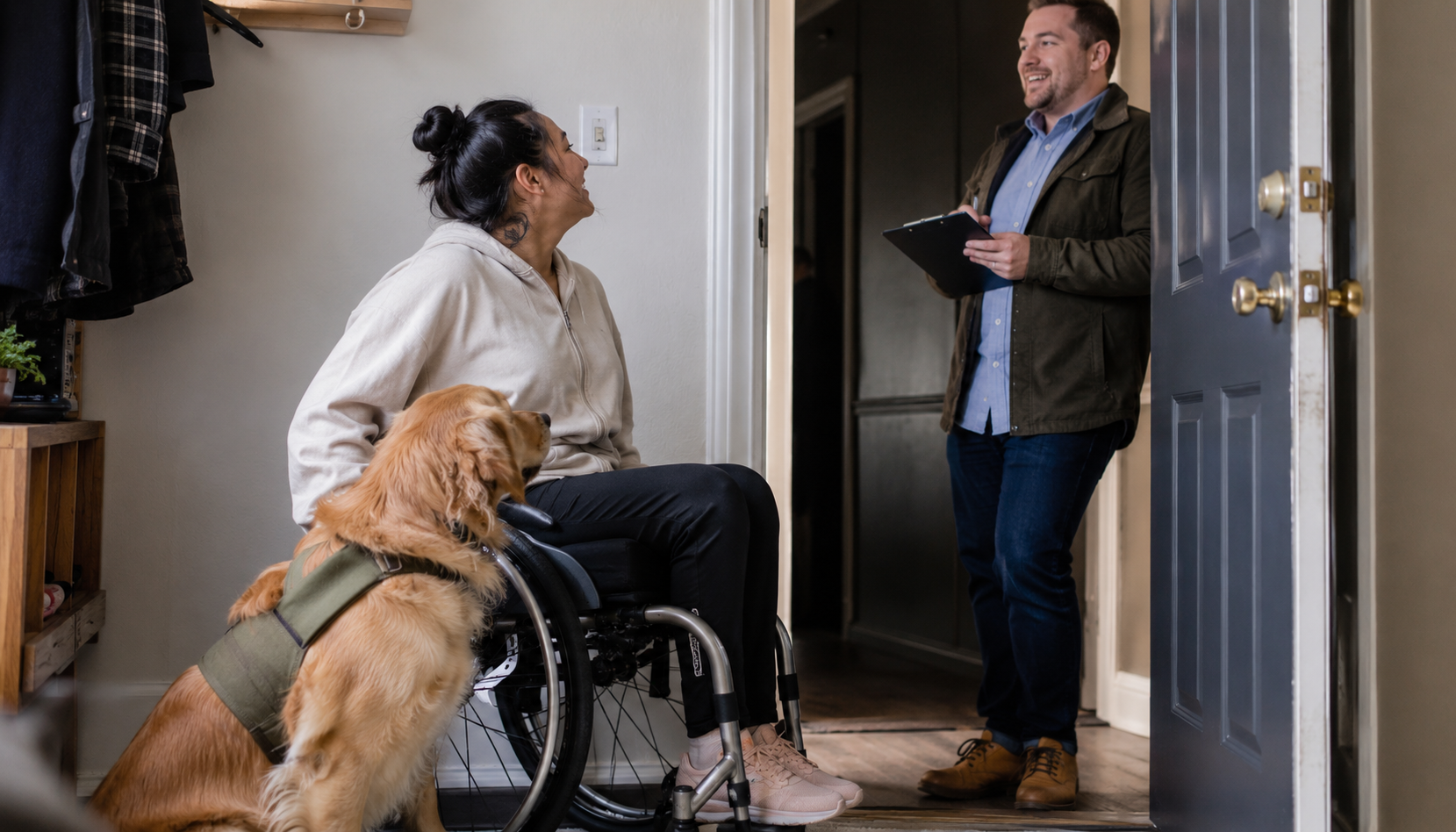
What Can a Landlord Legally Ask About Your Service Dog? (2026 HUD Update)
HUD withdrew its long-standing assistance animal guidance in September 2025, and a May 2026 enforcement memo n...
Read →
Service Dogs and Renting: Pet Fees, Breed Bans, and No-Pet Buildings (2026 FHA Guide)
No pet deposit, no pet rent, no breed restrictions: under the Fair Housing Act a service dog is not a pet. A p...
Read →Get the card. Skip the explanations.
Digital handler ID + AI ADA Coach + state-specific rules from $4.99/mo. 30-day money-back guarantee on lifetime plans.
See plans →