
How I Stopped Hiding My Disability at Work With My Service Dog
Reasonable accommodation and bringing a service dog into a workplace.
Hiding it for seven years
Erica has fibromyalgia. The pain is invisible. The fatigue is invisible. The cognitive fog after a bad night is invisible.
So she hid it. Long sleeves in summer (heating pads underneath). Excuses for meetings missed ("dentist again"). Lunch breaks spent in her car with the seat reclined. For seven years, her employer thought she was healthy and reliable. Erica was paying for it in private.
Why she finally got a service dog
It wasn't a single event. It was the cumulative weight of hiding. Erica's therapist suggested a service dog. Erica resisted for a year, "I don't want to be visible like that." Eventually the math caught up: continuing to hide was costing more than disclosure would.
Cooper, a 3-year-old Golden Retriever, was trained for:
- Retrieving dropped items (Erica's hands often miss)
- Light pressure therapy for pain flares
- Cuing medication timing (Erica's cognitive fog makes routines hard)
- Steadying Erica when she stands up (orthostatic hypotension)
The accommodation request
The ADA Title I covers employers with 15+ employees. Service dogs at work are a "reasonable accommodation", the employer has to consider it unless it would cause "undue hardship." For a corporate marketing office, a well-trained service dog usually doesn't.
Erica drafted a formal accommodation request:
- The disability and its impact. She didn't name fibromyalgia by name initially, she described functional limitations.
- The accommodation requested. "Permission to bring my trained service dog to the office."
- Why the accommodation is needed. She listed the specific tasks Cooper performs.
- Supporting documentation. A letter from her doctor confirming she has a covered disability and would benefit from a service dog. Her training records.
She submitted to HR. The required response timeline under federal regs is 30 days. Erica got a response in 12.
What the employer got right
- Quick response. 12 days is fast for HR.
- Interactive dialogue. HR scheduled a meeting to discuss logistics, not to interrogate her about her disability.
- Practical concerns addressed honestly. Office allergies (one coworker had mild dog allergies, they relocated her to a different floor permanently). Office layout (designated rest spot for Cooper). Liability (employer's existing insurance covered it).
- Approved without conditions. No "let's try for 30 days and see." Just yes.
What the employer got wrong
- The all-hands announcement. HR sent a company-wide email announcing Erica's "new service dog" and asking colleagues to be respectful. Erica had not consented to this disclosure. The email made her the office novelty for two weeks.
- The "let's introduce Cooper" meeting. Well-intentioned but tone-deaf. Erica's coworkers wanted to meet Cooper. Erica wanted to do her job and have Cooper invisible.
- The cultural awkwardness. For months, every meeting involved someone joking about Cooper or asking about him. Erica had wanted boring normalcy, not novelty.
What she'd do differently
- Specify in the request: "Please do not announce this to the team." Some employers will assume disclosure is appropriate. Specify it isn't.
- Request that introductions happen one-on-one with key collaborators only. Not an all-hands meet-and-greet.
- Be clear about what kind of attention you want. "Cooper is here to do a job. He's not available for petting or photos. I prefer not to discuss his role or my disability in the office."
- Use the ID card. Even at work, a clean professional service dog ID on Cooper's vest gives a quick visual answer to "is that a service dog?" without conversation.
How it's going now (year 2)
Cooper has been at work for 18 months. The novelty has worn off. Erica's productivity actually went up by her own measure, she's not exhausted from hiding anymore. She still doesn't talk about fibromyalgia in detail. Cooper's presence is its own quiet explanation.
The cultural shift took about 6 months. Now Cooper is "just there." Erica is "just Erica." The disclosure costs upfront were real. The relief on the other side has been worth it.
Written and reviewed by the ADA Service Dog Team
VerifiedADA Service Dog is operated by NS Design ID Cards, the team behind assistancedogregistry.co.uk and esasupport.co.uk, supporting assistance dog handlers since 2020 with over 20,000 ID cards shipped. Our guidance is grounded in the Americans with Disabilities Act and current Department of Justice, DOT, and HUD guidance. Registration is voluntary, and we always say so honestly.
Important
This article is general orientation, not legal advice. For your specific situation, contact the ADA Information Line at 1-800-514-0301 or a disability rights attorney. ADA Service Dog Registry is a voluntary handler identification platform, not affiliated with the ADA, DOJ, or any US government agency.
Keep reading
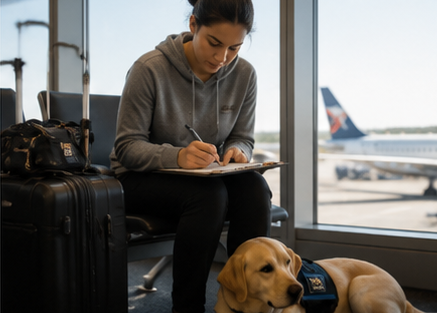
The DOT Service Animal Form, Step by Step: Every Field Explained (2026)
The one form US airlines can legally require before you fly with your service dog. Where to get the current ve...
Read →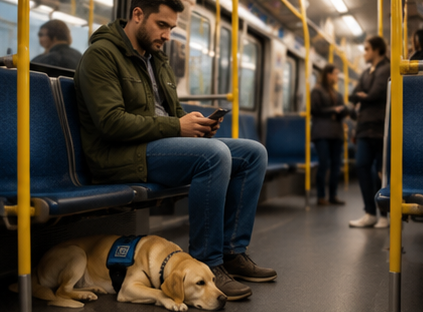
Public Transit & Your Service Dog: TSA, Amtrak, Metro, and Local Rules
Federal, state, and practical transit rules for service dog teams.
Read →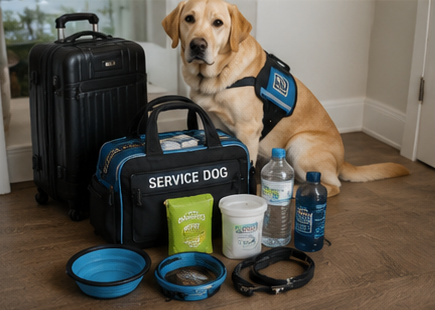
Service Dog Travel Kit: What to Pack for Any State
The practical travel essentials experienced handlers rely on.
Read →Get the card. Skip the explanations.
Digital handler ID + AI ADA Coach + state-specific rules from $4.99/mo. 30-day money-back guarantee on lifetime plans.
See plans →