Autistic Adults & Service Dogs: Why an ID Card Changed Everything
An autistic handler's story about meltdown interruption, deep pressure therapy, and what it's like to navigate a sensory-overloading world with a working dog. And why a small piece of PVC made the biggest difference.
"Autistic service dog handler" is rarer than it should be
Sarah Chen got Luna at 31. She'd been on the waitlist for an autism service dog through a Pacific Northwest program for almost three years. Most of her family didn't know she was autistic until Luna's arrival made it impossible to keep ignoring.
The dog wasn't a coming-out moment. The dog was a tool. But the dog also became Sarah's first concrete reason to tell people, "I'm autistic," and that turned out to matter.
What Luna does
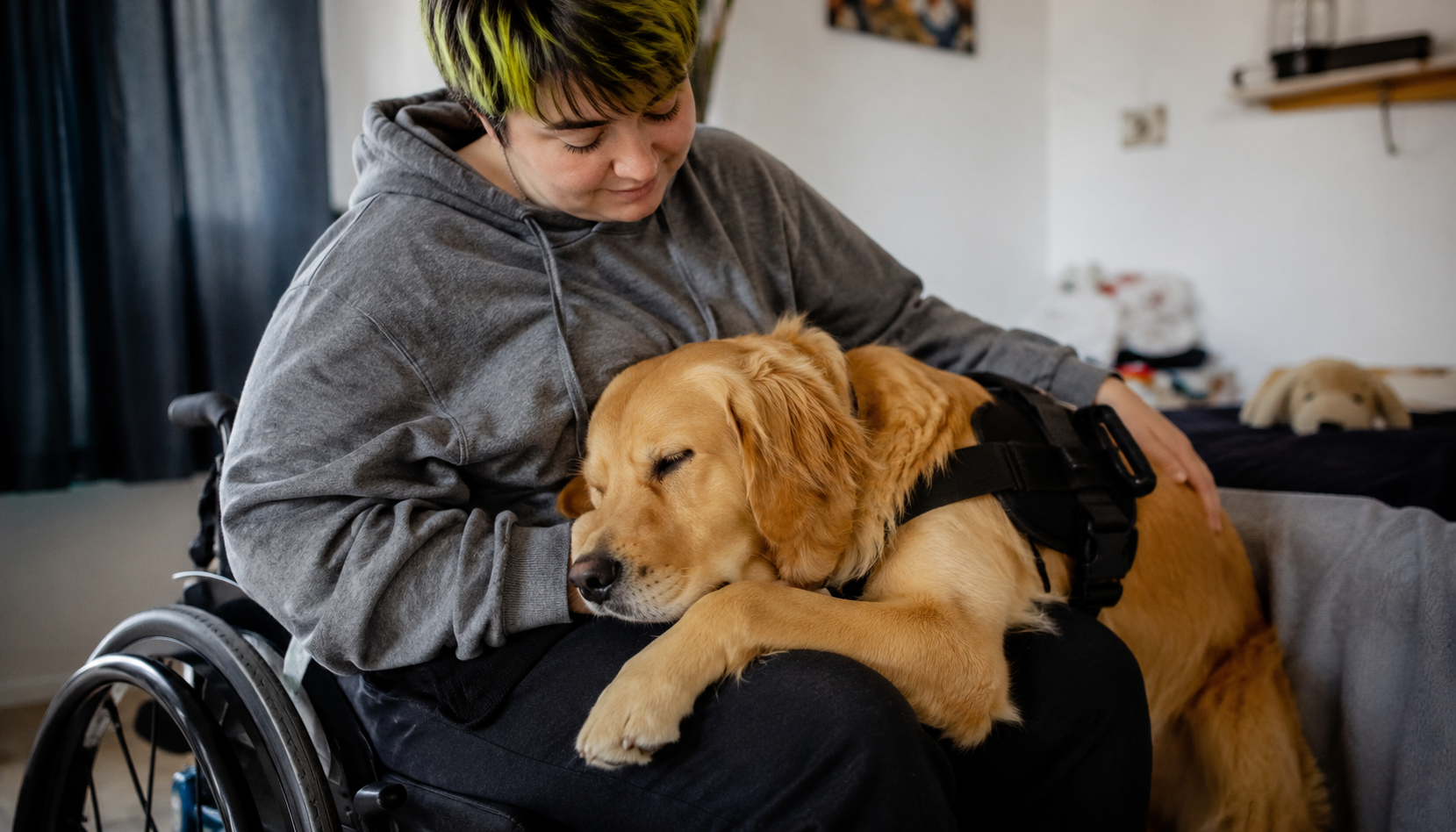
- Deep pressure therapy (DPT). When Sarah's hands flap or her speech starts faltering, Luna presses against her chest or lap, creating sustained physical pressure that slows the spiral.
- Meltdown interruption. Luna recognizes specific behavioral cues (jaw-clenching, stim escalation) and intervenes before a full meltdown. The intervention can be as simple as nose-bumping Sarah's hand to redirect attention.
- Sensory blocking. In crowds, Luna positions her body to create space. This is a trained behavior, not a happy accident.
- Routine cuing. Luna prompts Sarah for medication time, water breaks, and the transition home from work. Autistic adults often struggle with routine prompts that neurotypicals take for granted.
- Grounding during shutdowns. Different from meltdowns, autistic shutdowns are non-verbal episodes. Luna stays close, doesn't try to make Sarah do anything, and waits.
The autism-specific friction
The hardest part of being an autistic service dog handler isn't the ADA challenges (Sarah is articulate and good in arguments). It's the social labor of constantly explaining:
- "What's your dog for?" (asked in stores)
- "You don't look autistic." (asked everywhere)
- "My nephew is autistic but he doesn't need a dog." (asked at family events)
- "Can my kid pet your dog?" (asked constantly)
For an autistic adult, each of these interactions is socially expensive. Decoding what's being asked, formulating a response that won't escalate, masking enough to look "normal" while answering. It's exhausting in a way neurotypicals don't have a frame of reference for.
What the card changed
Sarah ordered a service dog ID card primarily for Luna's vest. Her motivation was simple: reduce the social labor.
"Before the card, every interaction started with 'is this a pet?' or 'service dog?' and I had to navigate the whole conversation. After the card, most interactions don't happen at all. People see the card on the vest, they get the picture, they move on."
For Sarah, this saved an estimated 30-60 minutes of social labor per day. Time spent not explaining her autism. Time spent doing other things.
The autism-specific scripts
Sarah developed pre-written responses for the predictable situations. She delivers them in a flat, even tone, partly because that's her natural voice, partly because it makes the conversations shorter.
"Luna's a service dog. She's not available for petting. Thanks for asking."
That's it. Three sentences. End the interaction. Move on. The flat tone is a feature, not a bug, it signals "we're not having a long chat here."
For other autistic adults considering a service dog
- Owner-training works. Several of the autistic handlers in Sarah's online community trained their own dogs. The ADA allows this. Programs have waitlists. Owner-training can work for handlers with the energy and a calm dog.
- Find a community. r/service_dogs is hit-and-miss on autism content, but autism-specific service dog groups on Facebook are quiet, supportive, and full of practical scripts.
- Get the card. The legal protections are there without it. The social-labor reduction is the actual benefit.
- Disclose carefully. You're not obligated to explain autism to anyone. The card lets you skip that disclosure 90% of the time.
- Use the AI ADA Coach if you have one. For autistic handlers, having pre-formed scripts ready for predictable situations is calming. The Coach can help draft them.
Written and reviewed by the ADA Service Dog Team
VerifiedADA Service Dog is operated by NS Design ID Cards, the team behind assistancedogregistry.co.uk and esasupport.co.uk, supporting assistance dog handlers since 2020 with over 20,000 ID cards shipped. Our guidance is grounded in the Americans with Disabilities Act and current Department of Justice, DOT, and HUD guidance. Registration is voluntary, and we always say so honestly.
Important
This article is general orientation, not legal advice. For your specific situation, contact the ADA Information Line at 1-800-514-0301 or a disability rights attorney. ADA Service Dog Registry is a voluntary handler identification platform, not affiliated with the ADA, DOJ, or any US government agency.
Keep reading

How I Stopped Hiding My Disability at Work With My Service Dog
Reasonable accommodation and bringing a service dog into a workplace.
Read →
From Walmart Interrogations to Walking Free: A PTSD Veteran's Story
Marcus served two tours. His service dog Buddy can interrupt panic episodes in 4 seconds flat. But the hardest...
Read →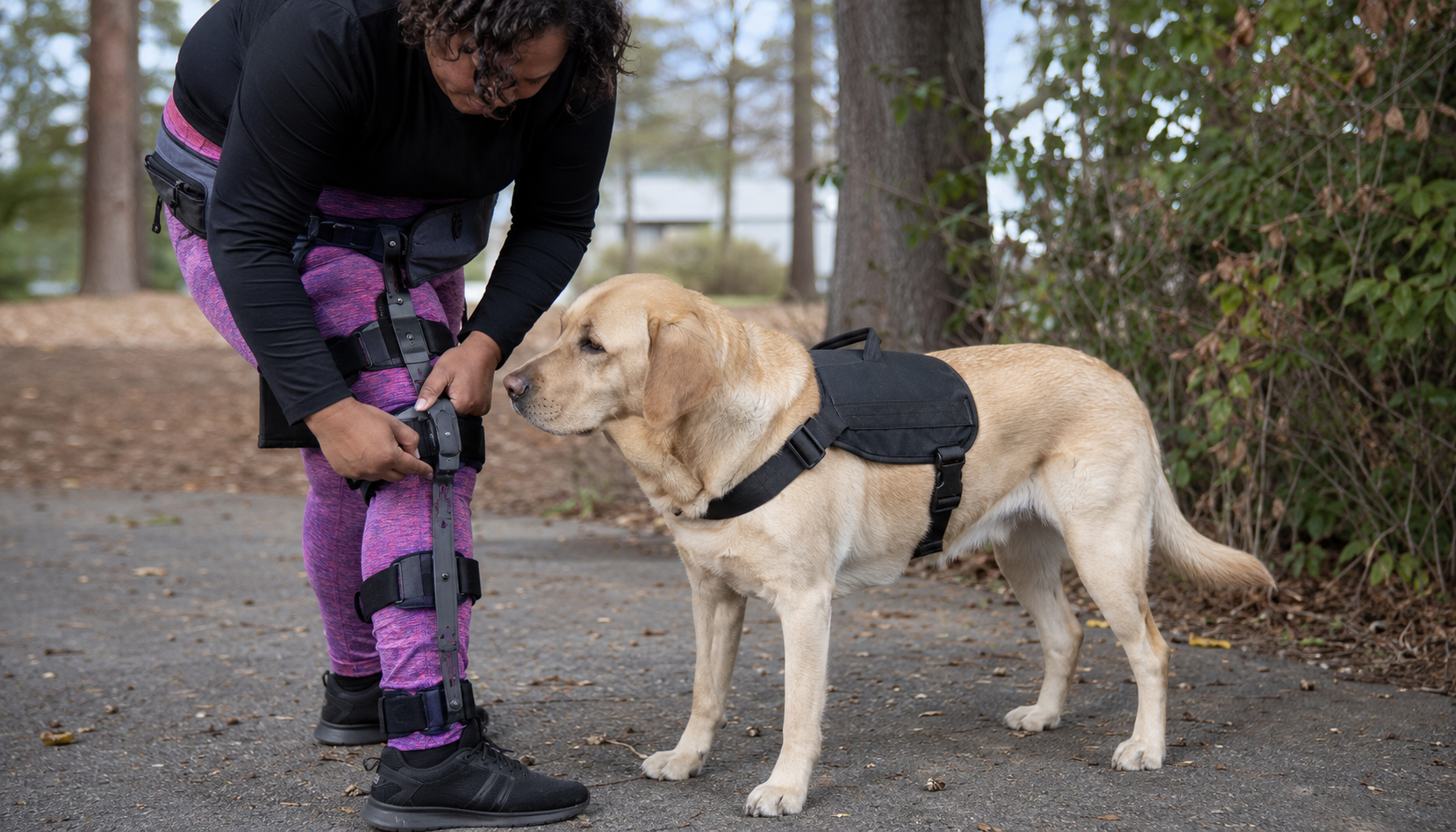
Training My Own Service Dog: 18 Months of Mobility Tasks
The ADA explicitly allows owner-trained service dogs. One handler walks through the entire 18-month journey —...
Read →Get the card. Skip the explanations.
Digital handler ID + AI ADA Coach + state-specific rules from $4.99/mo. 30-day money-back guarantee on lifetime plans.
See plans →